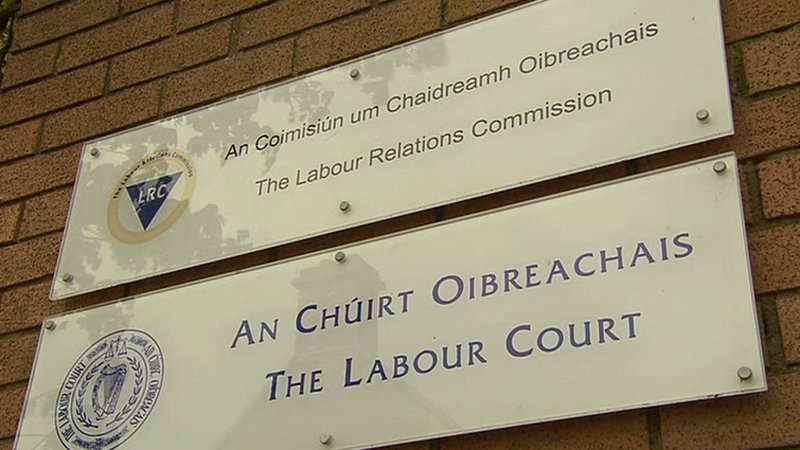
IFUT has welcomed a significant Labour Court recommendation which vindicates the trade union position that proposals to tackle precarious employment and improve working conditions in higher education must be properly engaged with through the agreed local bargaining process.
The recommendation concerns a joint claim by IFUT, SIPTU and Unite under the local bargaining provisions of the Public Service Agreement 2024–2026, covering academic, teaching and research grades across the higher education sector.
The unions developed a comprehensive package aimed at addressing some of the most persistent employment problems in higher education.
The proposals include:
- A conversion scheme for staff engaged in atypical teaching and academic work, including hourly-paid staff
- A proper career framework for researchers
- Rules governing the appropriate use of fixed-term and specified-purpose contracts
- Action to address the use of omnibus contracts
- A framework for the payment of exam marking and assessment duties
- An end to the use of term-time-only contracts where those contracts do not reflect the full scope of the work being carried out
- Measures to eliminate non-collectively bargained academic grades and provide greater consistency in grading across the sector
Department failed to engage as required
At the heart of the dispute was the refusal of the employer side to engage substantively with the unions' proposals.
The Department of Further and Higher Education had sought approval from the Department of Public Expenditure before engaging with the claim. When that approval was not forthcoming, the proposals were effectively prevented from progressing.
The employer side told the Labour Court that it understood the Department of Public Expenditure to have a veto over the nature of proposals that could be discussed through local bargaining.
The Labour Court has now made clear that no such veto exists within the agreement.
The Court found that the employer had not engaged with the unions in the manner envisaged by the agreement and stated that complexity or implementation challenges were not sufficient reasons to dismiss the proposals without proper engagement.
The Court has recommended that the parties now re-engage through the Workplace Relations Commission and work through the agreed local bargaining procedures.
Time to get on with the job
For the best part of two years, progress under local bargaining in higher education has been frustrated and delayed.
The effect has been to prevent unions from getting into substantive bargaining on issues which have an immediate impact on the working lives of thousands of people across the sector.
The Labour Court recommendation provides an opportunity to change that.
IFUT will now seek immediate re-engagement under the auspices of the Workplace Relations Commission.
Local bargaining was established to allow unions and employers to negotiate improvements in pay and conditions within individual sectors. It should now be allowed to do what it was intended to do.
In higher education, that means getting down to serious negotiations on precarious employment.
This is about hourly-paid lecturers, researchers moving from one temporary contract to another, staff working under insecure and atypical arrangements, and people who have spent years trying to build sustainable careers within higher education.
The objective must now be to turn the bargaining process into practical improvements in those people's working lives.
DPER has a role, but not a veto
The recommendation also provides important clarity about the proper role of the Department of Public Expenditure.
There is a role for DPER in verifying the costs and policy implications of proposals before an agreement is finalised.
That is fundamentally different from exercising a veto at the beginning of the process over what unions are permitted to table or negotiate.
Collective bargaining requires the parties to engage with proposals, test them, examine their cost and implications, and seek to reach agreement.
The Labour Court has now pointed the parties firmly back towards that process.
Funding issue remains to be resolved
A separate issue remains concerning the value of the 1% available for local bargaining.
The original calculation provided to the unions valued the 1% at approximately €8.07 million, calculated on the basis of basic pay.
That figure was subsequently reduced to €5.7 millionusing core recurrent funding as the basis of the calculation, despite the agreement expressly referring to basic pay costs, including allowances in the nature of pay.
The Labour Court has referred the interpretation of this provision to the Joint Implementation Committee for clarification.
IFUT does not accept that a calculation originally made on the basis specified in the agreement can simply be revised downwards using a different methodology. That issue will continue to be pursued.
A significant step forward
The Labour Court recommendation does not itself settle the employment proposals or the outstanding funding question.
What it does is remove a significant barrier to proper bargaining.
After almost two years of delay and frustration, the focus should now move away from arguments about whether these issues can be discussed and towards the substance of how they can be resolved.
It is time to get on with local bargaining, tackle precarious employment and deliver the improvements in working conditions that the process was intended to achieve from the outset.