by Assistant General Secretary Robert McNamara
Fools Acting Clever, or Clever Acting the Fool?
The Government needs to stop playing with words and start dealing with the dispute in front of it.
Micheál Martin says this dispute is “unwarranted”. Jack Chambers says industrial action is “unnecessary”. We are repeatedly told that the Government wants talks “without preconditions”.
Fine. Then let us deal with the facts.
The last public service agreement expired on 30 June. The Government knew the date it would expire. It did not arrive unexpectedly. We are now in October.
So when the Minister suggests that workers balloting for industrial action have somehow delayed a new agreement, the obvious question is: what was the Government doing before the agreement expired?
Workers did not create this timetable. The Government did.
And now we have this €1.2 billion figure being waved around as though a cheque has been placed on the table.
It hasn't.
The €1.2 billion is a provision for 2027, and even that figure is not all available for a new pay deal. The Government itself says it includes carry-over costs from the agreement that has already expired and associated public-service pension costs.
So presenting the full €1.2 billion as new money for a new agreement is simply misleading.
And crucially, it still does not deal with the second half of 2026.
You cannot pay an October electricity bill with a budget provision for next year.
You cannot pay this month's rent with a press release about money that may be spent in 2027.
And workers cannot be expected to spend another six months sitting around a negotiating table, stroking our chins and discussing an ever-expanding “reform agenda”, while their living standards continue to fall.
That is not serious industrial relations.
The Taoiseach has suggested that this argument is essentially about preconditions. Others have tried to portray it as unions splitting hairs over what comes first.
It is nothing of the sort.
This is the central issue in the dispute.
Before workers enter a lengthy multiannual negotiation about reform, productivity, flexibility and changes in working practices, they are entitled to know that the immediate loss in their living standards is going to be addressed.
That is not a precondition designed to prevent negotiations.
That is what the negotiation is about.
Indeed, there is something fairly extraordinary about the Government repeatedly demanding talks “without preconditions” while at the same time telling everybody that a new agreement must deal with reform, must operate within predetermined fiscal parameters and must meet the Government's requirements for changes in the public service.
Apparently a precondition is only a precondition when workers have one.
Dr Alan Eustace of Trinity College warned months ago where this approach would lead. If Government attempts to make workers trade protection of their wages against inflation for concessions on working practices, it is simply giving with one hand and taking with the other.
That warning has now come to pass.
And Government should understand something else.
The people taking industrial action are not doing so casually.
These are teachers, nurses, lecturers, civil servants, local authority workers and other public servants who have lived through an extraordinary increase in housing, energy, food, childcare and everyday household costs.
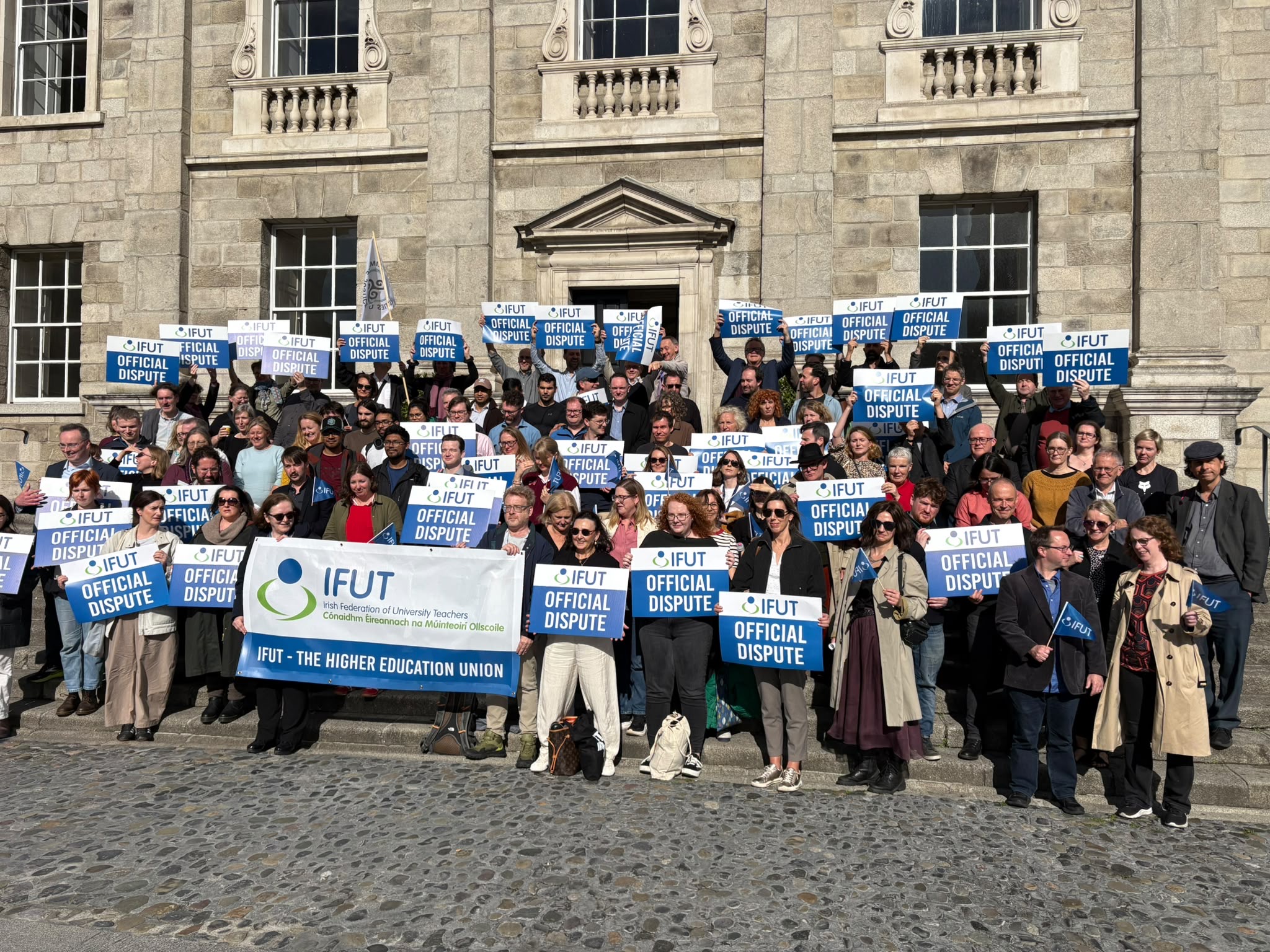
Union membership is growing. Our own ranks have been swelled by new members. People who may never previously have contemplated industrial action are now willing to stand on a picket line.
Government should ask itself why.
It isn't because somebody in a union office told them to be angry.
It is because their payslips no longer stretch far enough.
There is enormous anger out there, and dismissing that anger as an argument about procedure or “preconditions” is a serious mistake.
Nobody wants strikes for the sake of strikes. Public servants want to do the jobs they entered public service to do.
But industrial action has a purpose. It exists when ordinary negotiation has failed to make the employer confront an issue.
The Government is the employer.
It has the power to resolve this dispute.
So rather than lecturing workers about disruption, it should use that power.
Put a credible proposal on pay on the table. Address the cost-of-living loss now. Then we can negotiate seriously about the future.
That is the route out of this dispute.
The Government knows it! The unions know it!
And increasingly, public servants know it too!