IFUT members consistently report the difficulty of containing teaching, assessment, research and administrative responsibilities within contracted hours. IFUT’s engagement with members also underscores that workload allocation models can fail to capture key elements of academic work, including student support, pastoral care, research administration, grant preparation, quality assurance, and institutional service. These pressures affect wellbeing, create barriers to sustainable careers, and ultimately risk undermining teaching quality and student support.
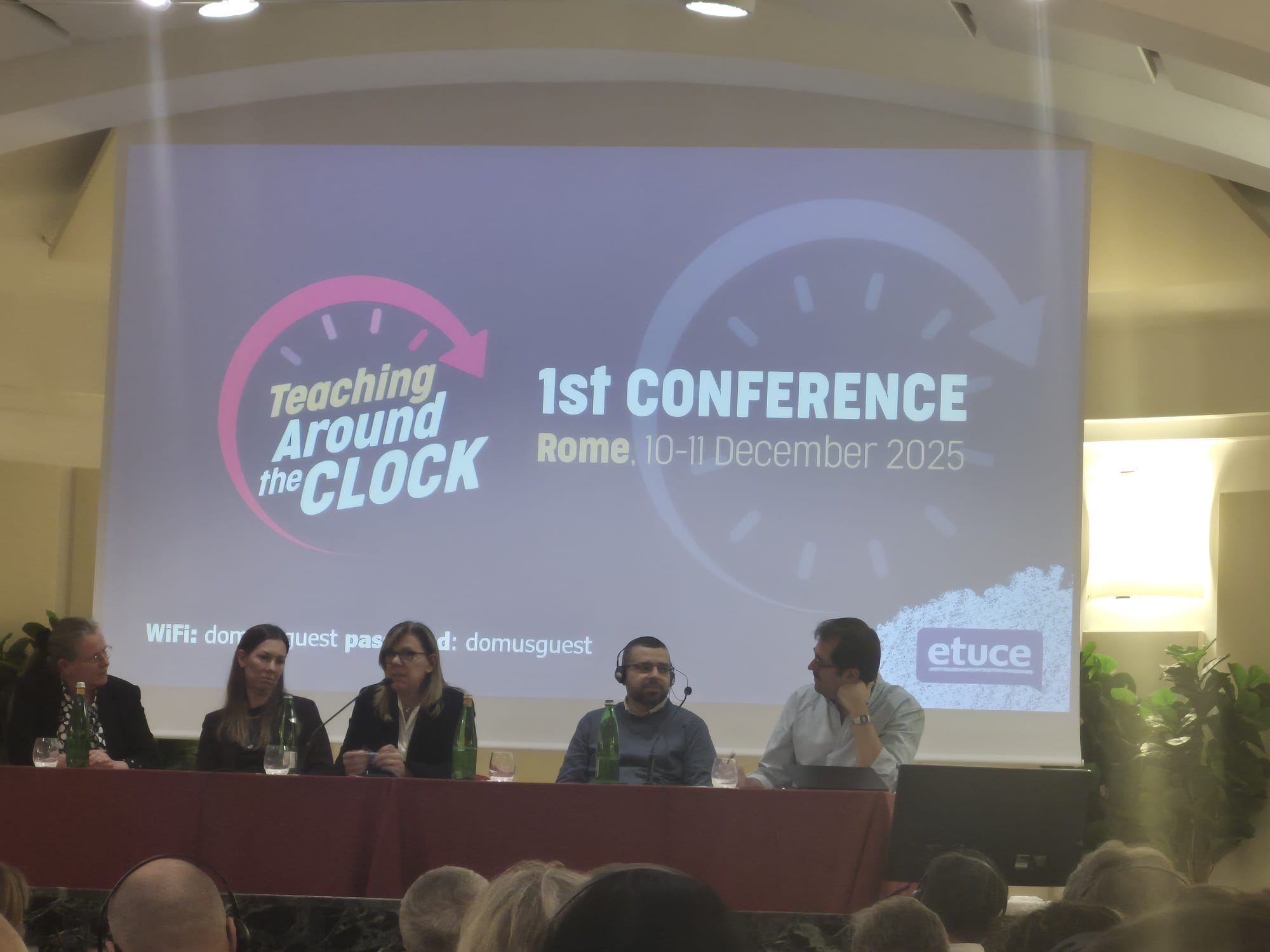
IFUT’s participation in Rome reaffirmed our commitment to engaging with these issues at every level. Individually, we will continue to support members through casework and representation. Collectively, we will continue to press employers for transparent and realistic workload models and fair recognition of academic labour. Nationally, IFUT will maintain its advocacy for sustainable funding, structured career pathways—particularly for researchers—and robust sectoral engagement. Internationally, we will continue to work with sister unions and ETUCE to strengthen shared evidence, solidarity and coordinated action.
The challenges identified in Teaching Around the Clock are not isolated he Irish Federation of University Teachers (IFUT) recently attended the Teaching Around the Clock conference in Rome, convened under the ETUCE project examining working time and compensation across education in Europe. The event provided an important forum for trade unions to compare experiences and to discuss the findings of the project’s desk research report, Teaching Around the Clock: Unveiling the Reality of Working Time and Compensation for Teachers in Europe (2025), with particular relevance for higher education.
A key message of the report is the growing mismatch between stipulated working time and the reality of academic work. Its analysis of higher education reflects familiar pressures: expanding administrative and non-teaching duties, intensified workload expectations, and the persistence of long working hours—often extending into evenings and weekends. The report also highlights the role of job insecurity and precarious contracts in shaping working-time patterns, especially for early-career researchers, and the challenges of ensuring that essential academic labour is fully recognised in workload frameworks.
These themes align with IFUT’s experience in Ireland. Across our membership—lecturers, researchers, tutors and other grades— or local—they are systemic and Europe-wide. IFUT remains committed to ensuring academic work is sustainable, fairly recognised, and supported by meaningful dialogue and effective collective bargaining at institutional, national and European levels